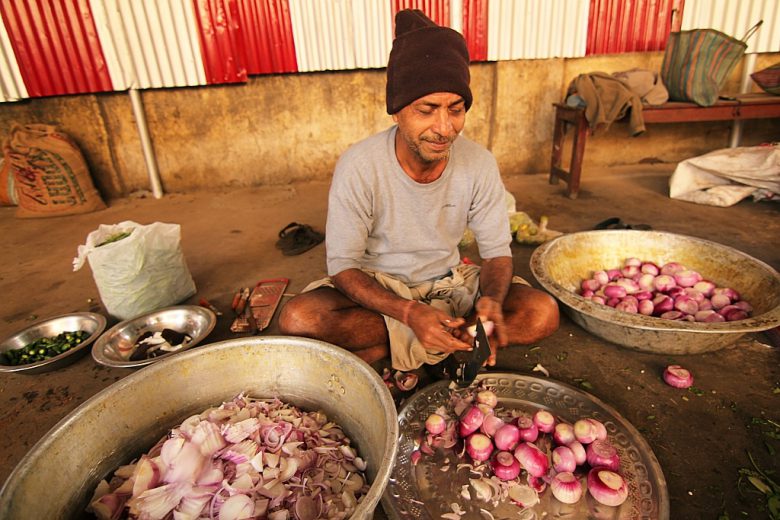
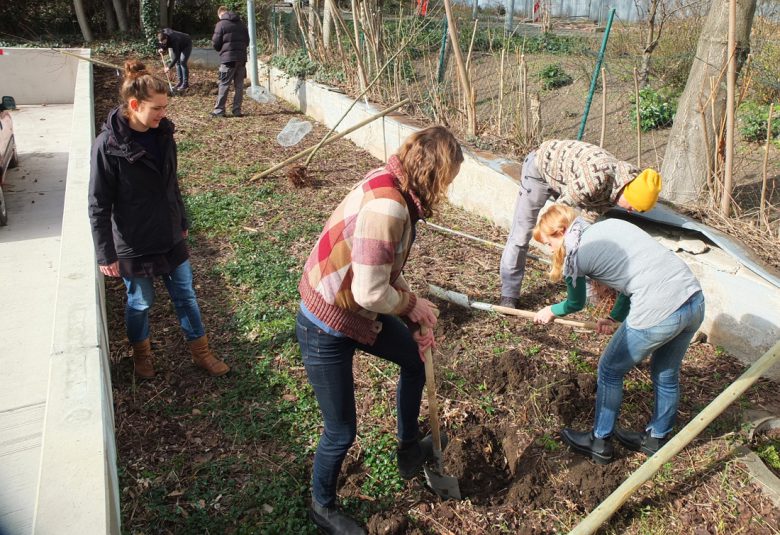
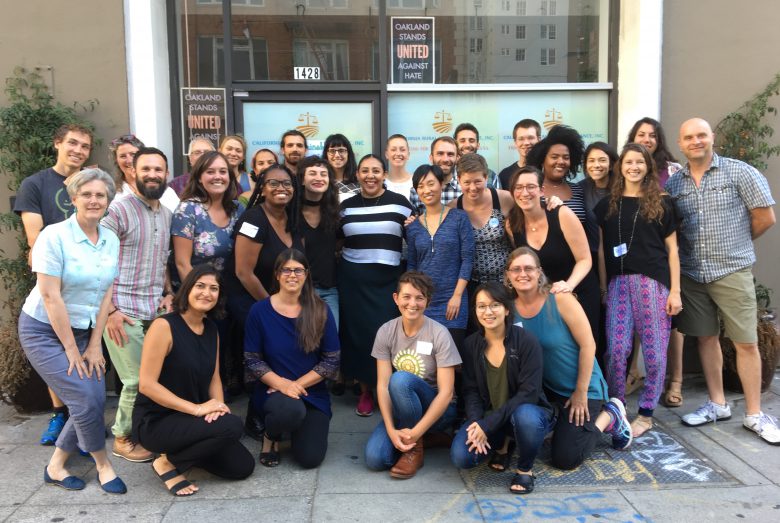
Nestled in Galicia’s fertile hills, the commons community of Froxán is engaged in a struggle to protect its territory and history from Spanish miner Sacyr’s plans to re-open the San Finx tungsten mine. The defining feature of Froxán’s resistance has been the community’s decision to counter the advances of mining by working positively for land, culture… Continue reading
A House of the Commons
Norwegian Layman’s Christianity peaked in this house. The man who lived here for almost 40 years, Magnus Johansen Dahl from Spydeberg, was the son of a “husmann”, which in some aspects was worse than serfdom. Serfs were many places well protected by traditions. In spite of his background, Dahl became the apostel of the Totenåsen Hills…. Continue reading
Freedom, Equality and Commoning in the Age of the Precariat: an interview with Dirk Holemans
Dirk Holemans is the co-founder and co-director of OIKOS, a green Belgian think tank which has published two dutch-language books by Michel Bauwens. He has written a book which deals with the tension between freedom (individual) and security (social protection etc…). The book is of great interest, because it places the current dilemma’s in the… Continue reading
The Future of Homemade Food is at Risk
Christina Oatfield: Have you noticed how many tech start-ups are interested in food these days? We have. There are now dozens of apps you can use to order food to be delivered to your door — either by a human being or sometimes even by a robot. You can order take-out, groceries, or partially prepared… Continue reading
Rethinking the balance between equality and hierarchy: 1) How to maintain reverse dominance
In a system of reverse dominance, however, the many act in unison to deflate the ego of anyone who tries, even in an incipient way, to dominate them. The following article makes an important point: Egalitarian societies didn’t just happen, they had a culture and ‘techniques’ that maintained it and Peter Gray calls it “reverse… Continue reading
Urban foraging: Commoning the edible city
This site is about foraging in the city. It promotes the idea that cities can become edible. That edible cities are a commons that all urban actors should strive to produce together. Adrien Labaeye is taking the lead on this great new initiative dedicated to foraging and the urban food commons. The following texts are… Continue reading
Fab Labs supports local entrepreneurship with open-source and peer-to-peer production
Cross-posted from Shareable. Khushboo Balwani: Here’s the problem: How can consumers become producers? The shift from consumer culture to maker culture is often described in terms of a synthesis between consumers and producers —”prosumers.” What practical steps can be taken for people to become prosumers? Here’s how one organization is working on the problem: In 2002, Neil Gershenfeld,… Continue reading
Launching the Nonprofit Democracy Network
Simon Mont: How can nonprofits and movement workers committed to social transformation embody the change we want to see and become more effective, accountable, and equitable as we do it? In late September 2017, thirty-eight people from eighteen different organizations based in ten different states came together to answer this question and learn how to effectively… Continue reading
Matchfunding Social Entrepreneurship and the Commons Collaborative Economy in Barcelona
A new form of citizen participation arises in Barcelona, combining participatory budgets and crowdfunding. It is a co-responsibility model called Matchfunding and it allowes citizens to start and support initiatives for the improvement of Barcelona by connecting participation and democracy with public budgets. The Goteo Foundation (www.goteo.org), in collaboration with the Barcelona City Council and… Continue reading
Beyond Supply and Demand: The Dynamic Equilibrium Between Global Thresholds and Allocations
As a monetary adviser, I spent many years questioning bankers on the authenticity of their balances sheets. What stood out most for me in these discussions was this: the social demand for commodities is often claimed by banks as having a direct link with the ecological supply of resources which are extracted, produced and sold as commodities. But this… Continue reading