In our report Intelligent Sharing: unleashing the potential of health and care data in the UK to transform outcomes, we recommended a number of measures to promote and facilitate what we termed ‘data philanthropy’, and the passage of the Data Protection Bill through Parliament affords us a timely opportunity to explore how Government might implement some… Continue reading
Michel Bauwens on Commoning our Democracy
A few weeks back we announced Michel Bauwens’ intervention at Democracy Day in Belfast. Now, courtesy of our friend and colleague Kevin Flanagan, we present the audio for Michel’s talk. Presentation resources This is a recording of the presentation ‘Commoning our Democracy’ by Michel Bauwens of the p2pfoundation.net/ at the Imagine Festival in Belfast 14/03/2018. imaginebelfast.com/events/commoning-our-democracy/ Slides… Continue reading
Taking Joint Control – Trade Union and Co-operative Solutions for Decent Work
The labour market in the UK has changed dramatically since 2006. Employment and social protection today for most new jobs is either thin or absent and as a result a new in-work poverty trap is burgeoning. 7.1 million workers (more than 20 percent of the workforce) are in precarious forms of work and 30 percent… Continue reading
Our Economy is a Degenerative System
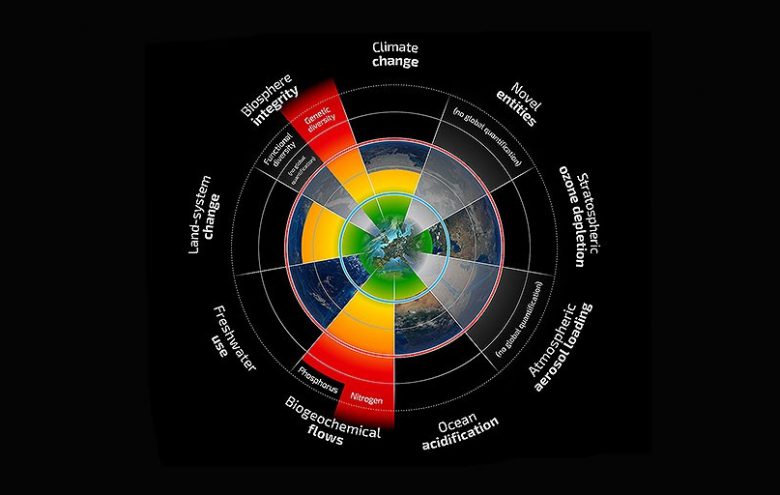
Impacts of resource hungry exploitative economies “What is 120 times the size of London? The answer: the land or ecological footprint required to supply London’s needs.” — Herbert Giradet Our ecological footprint exceeds the Earth’s capacity to regenerate. A number of useful indicators and frameworks have been developed to measure the ecological impact that humanity and its… Continue reading
Now Underway, a Neocolonial Land Grab on Barbuda
Since 1834, when slavery was abolished on the Caribbean island of Barbuda, land there has been owned as a commons. The entire population collectively owns and controls the land, not private owners and developers. That may be about to change – with all the catastrophic results usually associated with enclosure. After Hurricane Irma devastated 90%… Continue reading
Patterns of Commoning: The Internal Dimensions of the External World: On Commons and Commoning
David Bollier and Silke Helfrich: In Part II of Patterns of Commoning, we introduced a broad diversity of remarkable commons. The goal was to explain their origins, context and other salient features, and in so doing make this invisible realm of social experience more visible – and thus more easily spoken about and discussed. Unlike many… Continue reading
Latin America: End of a golden age? How the Commons creates alternatives to neoliberalism and the vanguard left
In this eye-opening dialogue between Franck Gaudichaud and sociologists Miriam Lang and Edgardo Lander, the initial promise and subsequent disappointment of 21st Century Socialism is thoroughly analysed in the Venezuelan and Bolivian context. When asked toward the end of the interview what the solutions are, the interviewees stress the importance of self-organised, bottom-up initiatives, alternative… Continue reading
Better Land-Based Economies and other reports
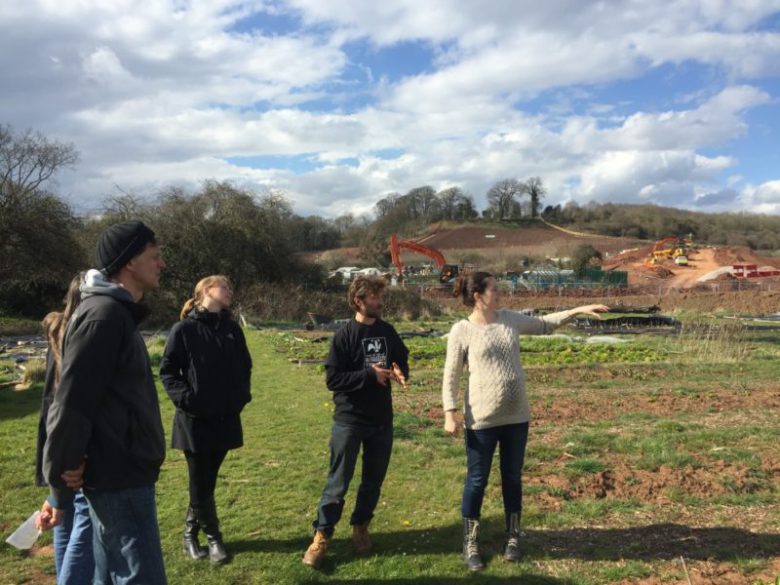
Community food enterprises are a success story of local collective action and have the potential to make significant contributions to local economic resilience. However despite its success, and the existence of some supportive policy drivers, the sector faces barriers to realising its full potential. Better Land-Based Economies explores these contributions, the issues they face, and… Continue reading
Gathering Storms: Forecasting the Future of Cities
The prognosis for our planet, now widely accepted, is shattering our vision of a bright future for our cities, characterised by abundance and technological expansion. As a result, we urgently need to envision and confront the scenarios that are likely to become our reality, in the hope that this work of imagination can help us… Continue reading
Rethinking the balance between equality and hierarchy: 2) New insights into the evolution of hierarchy and inequality throughout the ages
This is a follow up on our earlier article on finding techniques for ‘reverse dominance’, i.e. avoiding the concentration of power. More indications of how to restore a new balance towards egalitarian (or rather ‘equipotential’) outcomes come from David Graeber, who wrote a very important article summarizing the last 3 decades of findings from archaeology… Continue reading