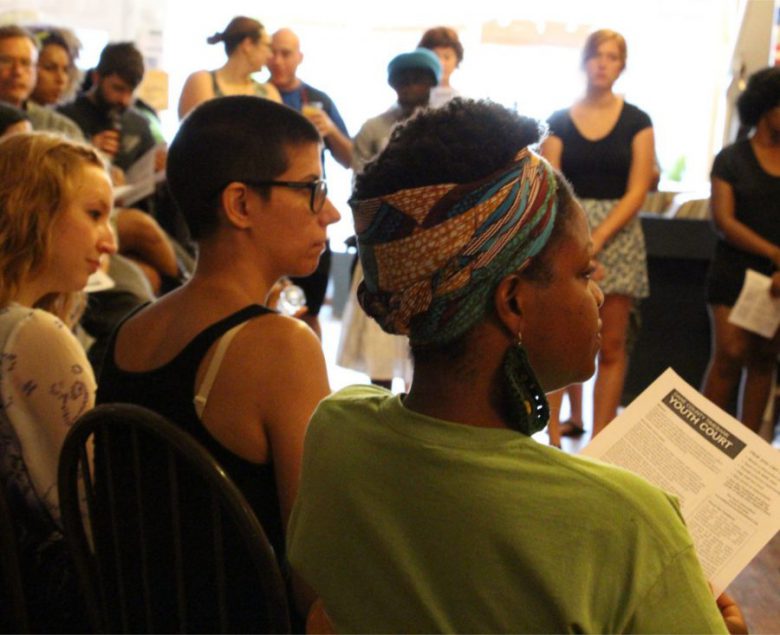
Reposted from Occupy.com (and originally sourced from TNI’s excellent recap), Nick Buxtom shares some positive news: Nick Buxtom: The bad news streaming through our media in 2017 has been relentless. However it doesn’t tell the full story. Beyond the headlines, there have been countless amazing social movement struggles in different regions of the world that deserve to… Continue reading
Trade Union and Cooperative Strategies for Organising Precarious Workers
The three main types of insecure work, casual, zero‐hours and self‐employment, are all on the increase. Ongoing labour market deregulation, the impact of information technology and the new gig economy means income, hours, days or even work locations can no longer be guaranteed as employment rights are eroded. More and more workers are becoming socially… Continue reading
Summary of Xnet’s work defending Digital Rights in 2017
Index: # COPYRIGHT AND ACCESS TO KNOWLEDGE AND INFORMATION – Directive of the European Union on Copyright in the Digital Single Market – “Canon Digital” Private Copy Levy in the Spanish State – Copyright exceptions and limitations in Spain # FREEDOM OF INFORMATION AND PROTECTION OF LEAKERS / ALERTERS / WHISTLEBLOWERS – Anticorruption whistleblowing platforms… Continue reading
Fully Automated Green Communism
Aaron Bastani has written a fantastic, concise analysis of the current political economy vis a vis environmental realities. While I agree that we need attractive visions of the future (see our recent Commons Transition Primer for ours) and that, yes, States and unions are key components for any realist, short-term change, I found the article’s undertones… Continue reading
Climate change: Living Through the Catastrophe
Jerome Roos: In January 2017, the Science and Security Board of the Bulletin of Atomic Scientists moved the infamous Doomsday Clock featured on the cover of its journal to 2.5 minutes before the hour — the second-closest to midnight it has been since its inception in 1947. “This year’s deliberations felt more urgent than usual,” the Board noted,… Continue reading
Aaron Perzanowski and Jason Schultz on the End of Ownership in the Internet of Things Era
Republished from Motherboard’s Soundcloud: The internet of things, End User License Agreements, and Digital Rights Management are increasingly being used to give electronics manufacturers control and ownership over your stuff even after you buy it. Radio Motherboard talks to Aaron Perzanowski and Jason Schultz, authors of The End of Ownership about what we stand to lose… Continue reading
The Mutual Aid Network Takes a Ground-Up Approach to Create a Collaborative Economy
Cross-posted from Shareable. Stephanie Rearick and Leander Bindewald: If it wasn’t crystal clear just weeks ago, it is now: The economy as it stands is currently positioned in direct opposition to social and environmental objectives. For the sake of the wellbeing of our communities, our children, and our planet, it is imperative we change the… Continue reading
Shrinking Spaces for civil society in natural resource struggles (new study)
Our study “Tricky Business” shows how the mechanisms of expropriation work. About the Study Resource and energy demand has increased over the last few decades, with more extraction and land use happening in more countries than ever before. The rising resource demand from the industrialized countries and emerging economies depends on the resources located in… Continue reading
In the battle for net neutrality, can co-ops keep the internet open and democratic?
Small, community-owned ISPs are spreading – and could help to protect open internet access Sammi-Jo Lee, writing for Coop News, gives us the lowdown on the P2P alternative to ISP big players. Sammi-Jo Lee: In 2011, brand new fibre-optic cables lit up for the first time across the forested terrain of the Ozarks and up… Continue reading
Patterns of Commoning: New Ventures in Commons-Based Publishing
David Bollier, Lara Mallien & Santiago Hoerth Moura: . Community building turns out to be a great way to bypass the formidable costs of conventional markets and to bring authors and readers together in highly efficient ways. Below, we profile some noteworthy pioneers of commons-based publishing – for academic journals, books and magazines. These examples… Continue reading