Every year, TNI publishes a State of the Power report, which this time has the central theme of building ‘counter-power’. This volume contains many gems; every article brings new material about the evolution of social movements, with special attention this year to the commons as an expression and experience of counter-power (see the article on… Continue reading
Texting Cows, AGTech & the Future of Farming in Germany
Automation and digitisation are rising in farming and the broader agri-food sector. Germany – industrial powerhouse of Europe – seems an obvious place to embrace AGTech. From precision farming and data ownership to embodied energy and cost, what are the opportunities, the impacts and the implications? And how are agroecologists responding? Helene Schulze: When the body… Continue reading
New research explores a sharing economy based on ‘cooperation, solidarity, and support’
Cross-posted from Shareable. Darren Sharp: Commercial sharing platforms like Uber and Airbnb have reshaped the transportation and housing sectors in cities and raised challenges for urban policy makers seeking to balance market disruption with community protections. Transformational sharing projects like Shareable’s Sharing Cities Network seek to strengthen the urban commons to address social justice, equity,… Continue reading
‘The Third Industrial Revolution’ explores how sharing creates a sustainable world
Cross-posted from Shareable. Ruby Irene Pratka: Call it “An Inconvenient Truth” for the market economy. In “The Third Industrial Revolution,” American economic and social theorist, business school professor, and policy adviser Jeremy Rifkin lays out a bleak vision of a near-future world devastated by climate change, mass extinctions, slow economic growth, and rising levels of extremism and inequality…. Continue reading
New Ecological Economics: Superorganism and Ultrasociality
This is a fascinating and probing interview. It will provoke deep reflection on the questions of economic growth, the over-simplistic way we advocate for the transition to renewables, the incredible challenges to change systems …. the list goes on. No answers here and no promise of certainty for the outcome for human evolution. Nevertheless, it… Continue reading
Patterns of Commoning: How I Have Been Conducting Research on the Commons for Thirty Years Without Knowing It
What Blocked My View of the Commons Étienne Le Roy: Writing about commons as a member of a scientific community, which itself has developed only recently, has raised a number of problems for me. First, there is the time lag with which the complex problem of the commons gained our attention in the first place. Why… Continue reading
How Corporate Organizations Translate Climate Change into Business as Usual
How much faith can we place in corporations to save us from climate change? The following is extracted from An Inconvenient Truth: How Organizations Translate Climate Change into Business as Usual, by Christopher Wright and Daniel Nyberg and Why corporate promises to cut carbon can’t be trusted by the same authors. Abstract “Climate change represents… Continue reading
A Digital Map Leads to Reparations for Black and Indigenous Farmers
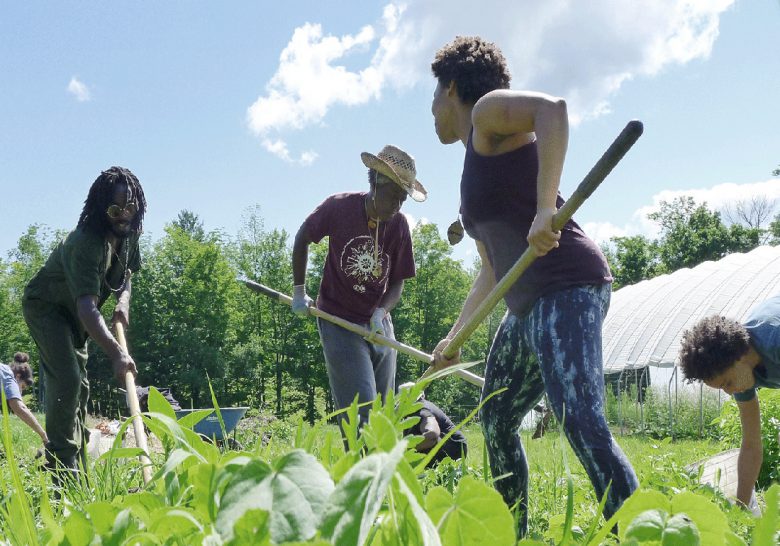
The map’s creators say they envision an equitable distribution of land and resources in the country. According to the nonprofit Urban Institute, the wealth of White families was seven times greater than that of Black families in 2016. The following article was written by Jean Willoughby and originally published by YES! magazine Jean Willoughby: Last month, Dallas… Continue reading
Better Technology Isn’t The Solution To Ecological Collapse
Jason Hickel: It’s hard to ignore the headlines these days, with all their warnings about ecological breakdown. Last year brought troubling news on everything from plastic pollution to soil depletion to the collapse of insect populations. These crises are worsening as our demands on the Earth intensify. Right now, virtually every government in the world is committed to pursuing economic growth:… Continue reading
An Internet of ownership: democratic design for the online economy
The following article was published in The Sociological Review 66, no. 2 (March 2018). Updated 2018.02.05. The disappointments of the online economy – for instance, user surveillance and systemic labor abuses – stem at least in part from its failures to meaningfully share ownership and governance with relevant stakeholders. Under the banner of ‘platform cooperativism’,… Continue reading