In 2011, a campaign that would eventually become Community Power was set up, with the aim of directing more of the US$450 million Minneapolis residents spend each year on energy bills towards a clean energy economy. Since the partnership’s creation, a broad coalition of actors have pushed forward community-grounded energy solutions: universally-accessible, debt free financing… Continue reading
OD&M students’ mobilities
By odmadmin Last week, 12 students of the OD&M training visited the training nodes (Florence, Bilbao, London, Dabrowa Gornicza) exploring the local ecosystems of alliances between Universities, makers communities and enterprises. The mobility gave the possibility to build mutual knowledge and relations between students from the four countries, and has been a very positive experience… Continue reading
Why ‘Game of Thrones’ was about ecomodernism
By Chris Giotitsas & Vasilis Kostakis Game of Thrones was arguably about climate change, but the HBO series turned this narrative around by presenting a last-minute technological solution as magically saving the day, the planet, and existence. !!! SPOILERS AHEAD !!! Game of Thrones was arguably about climate change. George RR Martin himself confirmed that it is… Continue reading
A Bold Agenda for Treating Land as a Commons
The privileges of land ownership are so huge and far-reaching that they are generally taken as immutable facts of life – something that politics cannot possibly address. A hearty salute is therefore in order for a fantastic new report edited by George Monbiot, the brilliant columnist for The Guardian, and a team of six experts. … Continue reading
Book review: The History of Community Development Financial Institutions
Book review by Matt Cropp, republished from geo.coop Democratizing Finance: Origins of the Community Development Financial Institutions Movement Clifford N. RosenthalFriesen Press, 2019 For those of us working to build the co-op economy in the U.S., Community Development Financial Institutions, or CDFIs, are strategically vital players in making more cooperation happen. Here in Vermont, knowing… Continue reading
Who Owns the Million Dollar Baseball?
Modern capitalism has the conceit that only individual property owners create wealth and they therefore deserve all the rewards. It cannot comprehend the idea that commoners and commons create value. Fortunately, a brilliant young cartoonist from Canberra, Australia, Stuart McMillen, clearly explains the collective origins of wealth through a wonderful extended comic strip. It is… Continue reading
The Circular Economy and The Access Economy
What happens to resource efficiency, recycling and waste management in a world where disownership is becoming the new normal? Image credit As much as it may seem that the nuts and bolts of resource and waste management is about sorting machinery, storage, bins and collection systems, it is really ultimately about people. We know that if… Continue reading
The Bankers’ “Power Revolution”: How the Government Got Shackled by Debt
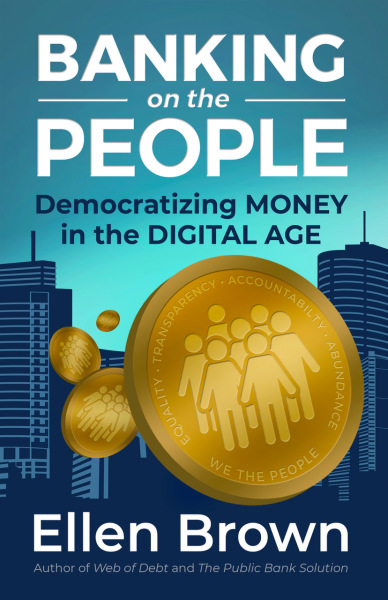
Posted on The Web of Debt on May 31, 2019 by Ellen Brown This article is excerpted from my new book Banking on the People: Democratizing Money in the Digital Age, available in paperback June 1. The U.S. federal debt has more than doubled since the 2008 financial crisis, shooting up from $9.4 trillion in mid-2008 to over $22 trillion… Continue reading
Co-ops and the Global Commission on the Future of Work: Q&A with Simel Esim
How are co-operatives responding to the world of work challenges? Interview by Anca Voinea, originally published at coop news on 1st May 2019 Simel Esim heads the International Labour Organization’s Cooperatives Unit, which manages ILO activities on co-operatives and other social and solidarity economy enterprises (SSEEs). She has been at the helm of the unit since 2012. In… Continue reading
The commons
The commons are collective resources managed by self-organized social systems under mutually acceptable terms. Written by Dana Brown, Director, The Next System Project. Article reposted from The Next System Project They are our collective heritage as a species—both those resources which we inherit from previous generations and those which we create—managed in such a way… Continue reading