
* eBook: Alternatives To Capitalism: Proposals For A Democratic Economy. by Robin Hahnel, Erik Olin Wright. New Left Project, 2014 URL =http://www.newleftproject.org/index.php/site/article_comments/alternatives_to_capitalism_proposals_for_a_democratic_economy Description “New Left Project’s new e-book, Alternatives to Capitalism: Proposals for a Democratic Economy, is now available for download. In it the leading radical thinkers Robin Hahnel and Erik Olin Wright take on… Continue reading
TRADITION AND COMFORT
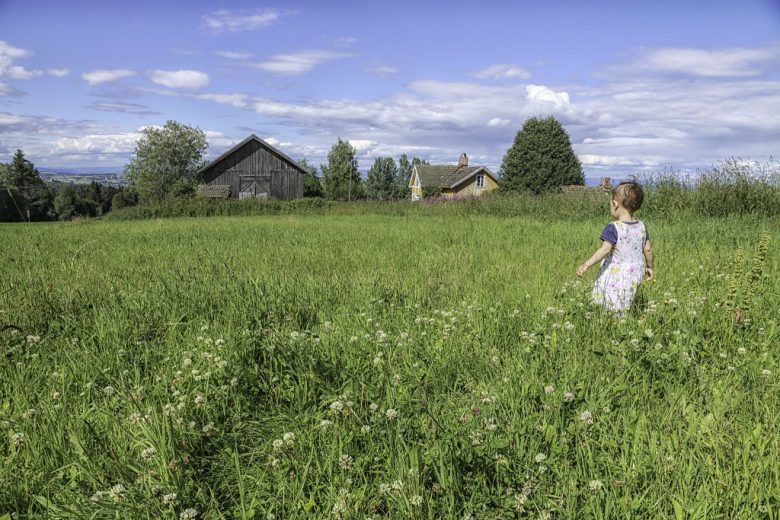
By Christopher Alexander. Original post here. Each family, sometimes each street or city block, each neighborhood, each region, each culture, each nation, each island, each climatic zone, each ecological region, has its own specific traditions. Above a Guatemalan kind of house painting. Below, a Mariachi band in Mexico. Some of these traditions are of a… Continue reading
P2P Summer School : The Art of Commoning
P2P Summer School: The Art of Commoning How can a commons-based collaborative economy strengthen the resilience of our communities 3 Days August 25th – 27th, 2015 – WeCreate, Cloughjordan Ecovillage, Tipperary, Ireland The Sharing Economy, Crowdfunding, Maker Spaces, Coworking, FabLabs, Creative Commons and using social media to organise are all examples of new ways of… Continue reading
Book of the Day: Many Faces of Anonymous
* Book: Hacker, Hoaxer, Whistleblower, Spy: The Many Faces of Anonymous. Gabriella Coleman. URL: http://www.bookforum.com/inprint/021_04/13908 Review Astra Taylor: “But as an anthropologist deeply embedded in the Anonymous community, Coleman could discern things that were invisible to casual observers. These other facets of Anonymous only began to come into focus for me on the first day of… Continue reading
Heather Menzies on how Canadian cities are reclaiming the commons
Excerpted from Heather Menzies: “I sense a reclaiming of that vision at work in many grassroots initiatives to reclaim the city as a public living space, not just retail, real estate and parking space. In Ottawa, some of this has been channeled through the conventional institution of the community association. In the neighbourhood where the… Continue reading
A new evaluation of the FLOK experience in Ecuador: what’s next?
At the end of 2013, three governmental institutions asked a team of researchers to draw up a participatory process in order to craft a transition strategy for a society based on ‘free, libre and open knowledge. The project was of course rooted in particular local i.e. ‘national’ concerns, but also transcended this local situation. The… Continue reading
On the “naturalness” of the commons and the self-interested invention of the cult of Elinor Ostrom
Why so much sudden love for Ostrom? Did people really think before that the commons was impossible? Wasn’t the countryside full of communal lands and herds? When you live in a community, you see how it’s the most natural and spontaneous thing in the world that everything is shared, that everything must strengthen everyone to… Continue reading
A New Commodity Is Born: Breast Milk
It’s not everyday that we get to see great masses of people alter their attitudes as a cherished act of motherhood is converted into a lucrative market. That’s what is happening these days with breast milk, as recently reported by the New York Times. Biotech firms want to capitalize on the rich therapeutic potential of… Continue reading
Generative Codes have Evolved from Pattern Languages, but are Much More Sophisticated Generating Systems
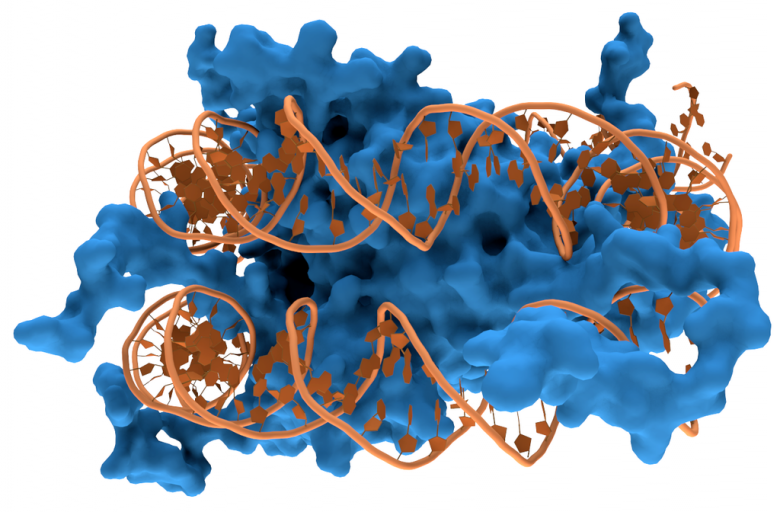
By Christopher Alexander. Original post here. A generative code is a system of unfolding steps that enable people in a community to create a wholesome and healthy neighborhood. The steps are governed by rules of unfolding that are not rigid, but depend on context, and on what came before. The rules work in a way… Continue reading
Free Commons-Based Peer Production Posters No. 3
The last in the series of free posters about Commons-Based Peer Production produced by P2Pvalue & designed by Laura Recio shows some of the crazy things we can do with collaborative communities. The poster can be downloaded below (click on image to go to the downloads page on Wikimedia Commons) & used under a CC BY-SA 4.0 license…. Continue reading