Last April 14th, only 10 days after the revelations of the Panama Papers, thanks to an anonymous source, the European Parliament passed the Directive on Protection of Trade Secrets which, regardless of its exception, establishes the general rule the protection of trade secrets over the right to information. Our elected representatives accepted that when a… Continue reading
From start-up to sellout: An inside look at MakerBot’s downfall
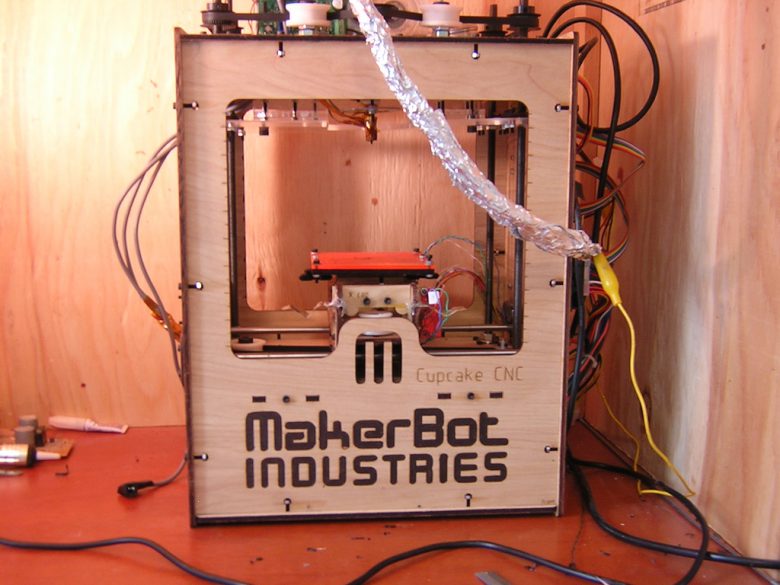
Originally written for Brokelyn Magazine by Isaac Anderson, a former MakerBot employee, what follows is a cautionary tale about the perils of venture capital inserting itself in the Open Source community: Once upon a time, MakerBot Industries was the darling of the Brooklyn start-up world. I’d know, because I worked there. The company this week… Continue reading
P2P Foundation Wins Golden Nica from Prix Ars Electronica
Congratulations to my colleagues at the Peer to Peer Foundation, and especially founder Michel Bauwens, for winning the 2016 Golden Nica for Digital Communities from Prix Arts Electronica! This is a great and well-deserved honor. There were a total of 3,159 entries from 84 countries for this venerable prize this year. In the prize citation,… Continue reading
The logic of platform economics explained
1. It is now more expensive to internalize than to link and network. 2. What assets were for the industrial firm, network effects are for the post-industrial firm. Excerpted from Esko Kilpi: “The basic units of the industrial era were transacting entities enabled by market, price and coordination mechanisms. It was a world of particles separated from… Continue reading
How to obviate the patent system by algorithmically generating all “prior art”
Genius or folly? “All Prior Art is “…a project attempting to algorithmically create and publicly publish all possible new prior art, thereby making the published concepts not patent-able.” The following is extracted from their website: All Prior Art is a project attempting to algorithmically create and publicly publish all possible new prior art, thereby making… Continue reading
Essay of the Day: The Transition Towards a Food Commons Regime
* Article: Vivero Pol, Jose Luis, Transition Towards a Food Commons Regime: Re-Commoning Food to Crowd-Feed the World (January 13, 2015). From the Abstract: ” Then, using the food regime theory and exploring the developments in the industrial food system (mainstream) and the urban alternative food networks (AFNs) and rural food sovereignty movement (innovative niches),… Continue reading
Procomuns Plenary 5: why decentralization is relevant
Video panel exploring questions of why decentralization is relevant. The session addressed this topic with examples from projects like D-CENT and Pump.io, as well as the digital social innovation ecosystem in Europe. There was also a presentation about the European strategy for Collective Awareness Platforms and distributed infrastructures. Featuring David Rozas, Loretta Anania, Irina Bolychevsky,… Continue reading
Towards a New Social Contract for Health and Sustainability: An Introduction
The following article, originally published in Enlivening Edge, is the first in a series of 7 looking at health and healthcare from a commons perspective. You can find the rest of the series at Enlivening Edge by searching for ‘Henk Hadders’, its author. The Social Contract between Market, State and the Commons is broken. Government… Continue reading
Do the Chambers of Commons need to emulate the U.S. Chamber of Commerce to better counter-balance it?
“The two could become rivals on many issues — but commons chambers should not be designed simply as contrarian mirror-like opponents of commerce chambers. The commons chambers have a more distinctive long-range challenge on which to focus: the rise of +N. (networks)” Excerpted from David Ronfeldt, in the context of his TIMN theory (tribes, institutions,… Continue reading
Essay of the Day: In Praise of Deficits
* Article: In Praise of Deficit: Public Money for Sustainability and Social Justice Paper presented to AHE conference July 2015 Mary Mellor, From the Abstract: “Conventional notions of public money as public expenditure based on taxation of privately created wealth will be critiqued. Public money will be defined as the creation of public currency free… Continue reading