
Very good introduction by Nathan Schneider on why we need platform cooperatives, in a lecture co-organized by Outlandish in London. From the notes to the video: Nathan Schneider (@nathanairplane) gives an introduction to the concept of platform co-operativism, and talks about what the digital economy can learn from the tradition of co-operatives. The talk is… Continue reading
State Power and Commoning: Transcending a Problematic Relationship
What changes in state power must occur for commoning to flourish as a legal form of self-provisioning and governance? What does the success of the commons imply for the future of the state as a form of governance? My colleagues and I at the Commons Strategies Group puzzled over such questions last year and decided… Continue reading
A New Economy: Social, Commons, Feminist, and Environmental

The following book review by our P2Pvalue colleague Mayo Fuster Morell was originally published on the CCCBLab site. Image CC-BY Democracy Chronicles Cases such as Airbnb, Uber, and eBay have popularised the concept of the sharing economy. Digital platforms allow for the exchange of products and services, defying the business model of traditional companies. As it… Continue reading
Techno-Utopianism, Counterfeit and Real 11: Left-Wing Critics of Mason — Kate Aronoff

Political action may be necessary. As Aronoff suggested, it is indeed a mistake to create a false dichotomy with counter-institution building. But framing “political action” as primarily state action, rather than a component of the counter-institution building movements themselves, is precisely the kind of false dichotomy we need to avoid. Political models centered on the… Continue reading
We need new stories for prosperous descent
The creative task of managing our civilisational descent – daunting though it is – promises to be both meaningful and fulfilling, provided we are prepared to let go of dominant conceptions of the good life and begin telling ourselves new stories of prosperity. Excerpted from Samuel Alexander: “The creative task of managing our civilisational descent… Continue reading
Michael Hudson: The Slow Crash
The following podcast and transcript of an interview with Michael Hudson were originally published on Naked Capitalism. An interview by Guns and Butter with Michael Hudson. His latest book is KILLING THE HOST: How Financial Parasites and Debt Bondage Destroy the Global Economy If you do not see the podcast player below, you can listen… Continue reading
Project of the day: Navajo Nation Peacemaking Program

Protecting societies against abuse has traditionally been the purview of the state. The need to protect the commons society against abuse will remain even after the commons transition. Reputation and ratings systems may be capable of weeding out free-riders. But how will they be restored to participation and genuine contribution? In Michel Bauwens vision of… Continue reading
In Conversation: Consumerism After Fossil Fuels

This article and recording by Richard Heinberg and Asher Miller was originally published on the Post Carbon Institute blog. The creation of the consumer economy—a complex, interconnected system of institutions, goals, rewards, and punishments—was one of the great social projects of the twentieth century, when energy was cheaply abundant and two of our chief economic… Continue reading
Trama: Netweaving and Collaboration in Rio de Janeiro

Written by Cândida Rato and cross-posted from Shareable. In late 2014 a design project at PUC-Rio university led five students to the street in Rio de Janeiro to restore an idle square by opening it for people collaboration and creativity. They received a high grade for the event and it was the starting point of… Continue reading
ECF IDEA CAMP 2017: Moving Communities
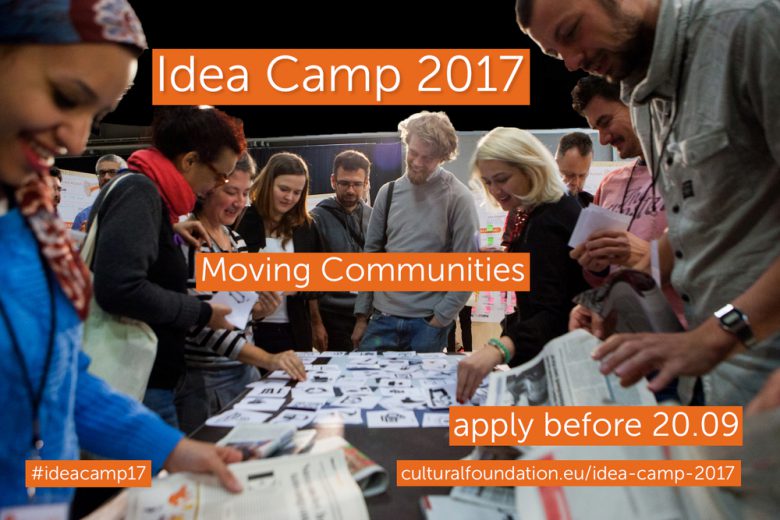
Original posted on the ECF blog, where you can find complete information. Photo from the Idea Camp 2015 by Julio Albarrán. You can now apply for ECF’s third Idea Camp that will take place in March 2017. Deadline to apply is 20 September 2016. What’s the Idea Camp? ECF’s Idea Camp is a three-day collaborative… Continue reading