Psychedelics and Systems Change

Originally published (in a modified form) on the MAPS Bulletin (Spring 2016) Many arguments for the legalization of cannabis and psychedelics draw on their relative harmlessness. Countering the rationale of prohibition, we can point out that compared to legal drugs like alcohol and tobacco, psychedelics are extremely safe. Given statistics comparing the annual number of… Continue reading →

Japan’s “Helicopter Money” Play: Road to Hyperinflation or Cure for Debt Deflation?

Fifteen years after embarking on its largely ineffective quantitative easing program, Japan appears poised to try the form recommended by Ben Bernanke in his notorious “helicopter money” speech in 2002. The Japanese test case could finally resolve a longstanding dispute between monetarists and money reformers over the economic effects of government-issued money. When then-Fed Governor… Continue reading →

Efficiency and the Commons

Efficiency is the spiritual practice of the religion of scientific management. Under its spell, we have not only privatized once abundant shared natural resources, but we have also privatized our intellectual and cultural commons Chris Corrigan questions the mantra of market efficiency, offsetting it against commoning: This morning, I’m reading this article. It’s a review… Continue reading →

Seeing Wetiko

One of the most important languages for expressing the values of the commons, I have come to realize, is art. It can often express visceral knowledge more effectively than words and give those insights a more powerful cultural reality. Those were my thoughts when I saw “Seeing Wetiko,” an “online gallery” of artworks, music and… Continue reading →

A ‘crisis of bigness’

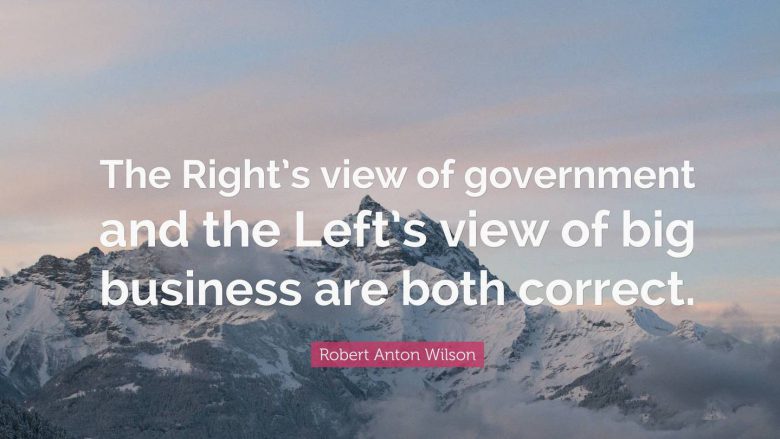
Reflecting on the quote from well-known anarchist and purveyor of ‘maybe logic’ Robert Anton Wilson: “The Right’s view of government and the Left’s view of big business are both correct”, it seems self-evident that what they have in common is that they are hierarchical bureaucracies that have grown so big that the majority of the… Continue reading →