
Why is software created using taxpayers’ money not released as Free Software? We want legislation requiring that publicly financed software developed for the public sector be made publicly available under a Free and Open Source Software licence. If it is public money, it should be public code as well. Code paid by the people should be available… Continue reading
Towards a global infrastructure for commons-based provisioning

Our forthcoming report Changing Societies through Urban Commons Transitions examines the re-emergence of the urban commons as both a bottom-up emergence by citizens/commoners and a radical municipal administrative configuration. Starting with an exploration of the relationship between cities and the commons, with a particular focus on the recent revival and growth of urban commons, we attempt… Continue reading
TRANSEUROPA/Convergent Spaces: alternatives for a Europe in crisis
Migration and borders, municipalism and the commons are the axes of a Festival of art and politics that invites dialogue and participation In conjunction with the Madrid European Commons Assembly, part of the P2P Foundation team will be present at the TRANSEUROPA festival. Come join us! European Alternatives’ (EA) Biennial Festival celebrates its 10th anniversary… Continue reading
Are there alternative trajectories of technological development? A political ecology perspective

Alternative technological systems could develop through the confluence of digital commons, peer-to-peer relations and local manufacturing capacity – but we need the integration of a political ecology perspective to face and overcome the challenges this transition implies. Humans do not control modern technology: the technological system has colonized their imagination and it shapes their activities… Continue reading
Re-imaging Politics through the Lens of the Commons

This essay of mine appeared on September 21 at journal-e, published by the 21st Century Global Dynamics website, UC Santa Barbara. The rise of so many right-wing nationalist movements around the world—Brexit, Donald Trump, the neo-Nazis in Charlottesville, Virginia, anti-immigrant protests throughout Europe—have their own distinctive origins and contexts, to be sure. But in the aggregate, they… Continue reading
The next European Commons Assembly will be in Madrid on October 25-28
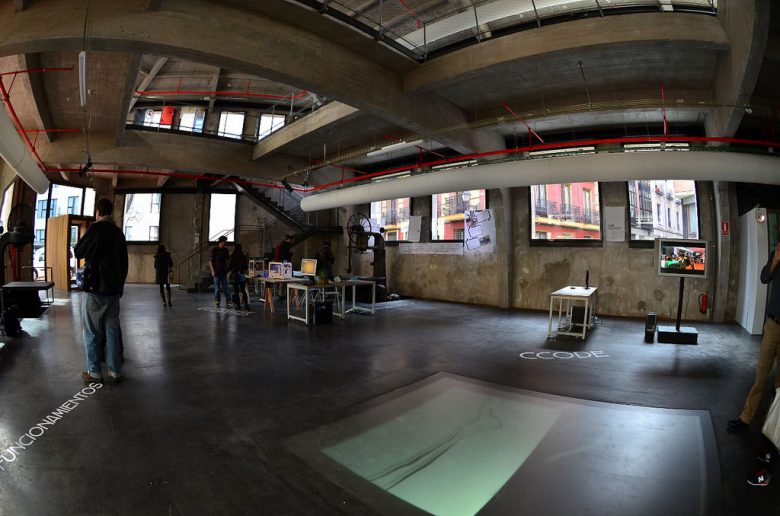
You’ll need to book travel and accommodation ASAP and submit it here to be reimbursed. The deadline for reimbursements is this Friday, 13th of October. For more information about the program, click here. In cooperation with the Transeuropa Festival and MediaLab Prado, the assembly features 4 days of workshops, visits to local commons initiatives, debates,… Continue reading
The Internet is under attack: This is the Battle for the Net
Reposted from Battle for the Net. What is net neutrality? Net neutrality is the principle that Internet providers like Comcast & Verizon should not control what we see and do online. In 2015, startups, Internet freedom groups, and 3.7 million commenters won strong net neutrality rules from the US Federal Communication Commission (FCC). The rules… Continue reading
Minimum Viable Structure: Organisational Scaffolding to Get Out of Emergency Mode

How to run a marathon when all you know is sprinting I had a phone call last night with a friend in Houston. They’re doing emergency relief work in the wake of Hurricane Harvey. In their words, West Street Recovery is: “a grassroots organization of people from diverse backgrounds, collaborating to leverage our skills and… Continue reading
Essay of the Day: Degrees of Freedom, Dimensions of Power
A great article by Yochai Benkler, originally published at Daedalus, the Journal of the American Academy of Arts & Sciences: “If we are to preserve the democratic and creative promise of the Internet, we must continuously diagnose control points as they emerge and devise mechanisms of recreating diversity of constraint and degrees of freedom in… Continue reading
How a Universal Basic Income could Fire the imagination
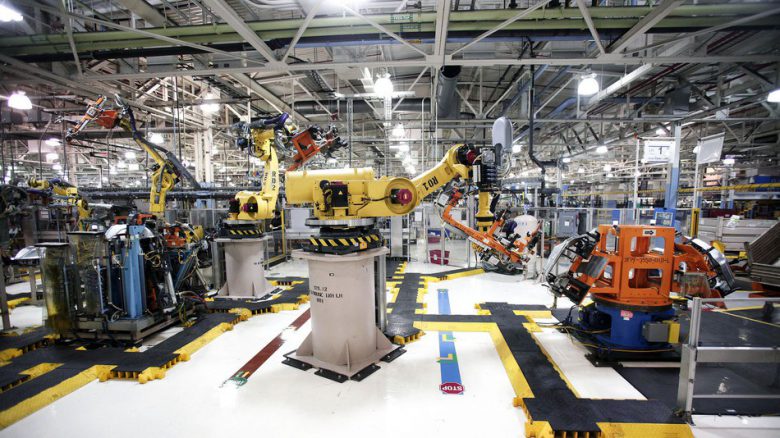
Martin Kirk is Co-founder and Strategy Director for The Rules. They work on challenging root causes of global poverty and inequality and climate change, but specifically through a narrative lens. They look a lot at psychology, cognitive linguistics, network theory, that sort of thing, to try and get into the deep narratives and deep logics and assumptions… Continue reading